Are you ready to embrace the kaleidoscope of colors in your garden? We’ll guide you through the process of obtaining enchanting hues in roses, tulips, hyacinth, zinnia, trillium, and more. Follow our step-by-step instructions to create a vibrant masterpiece.
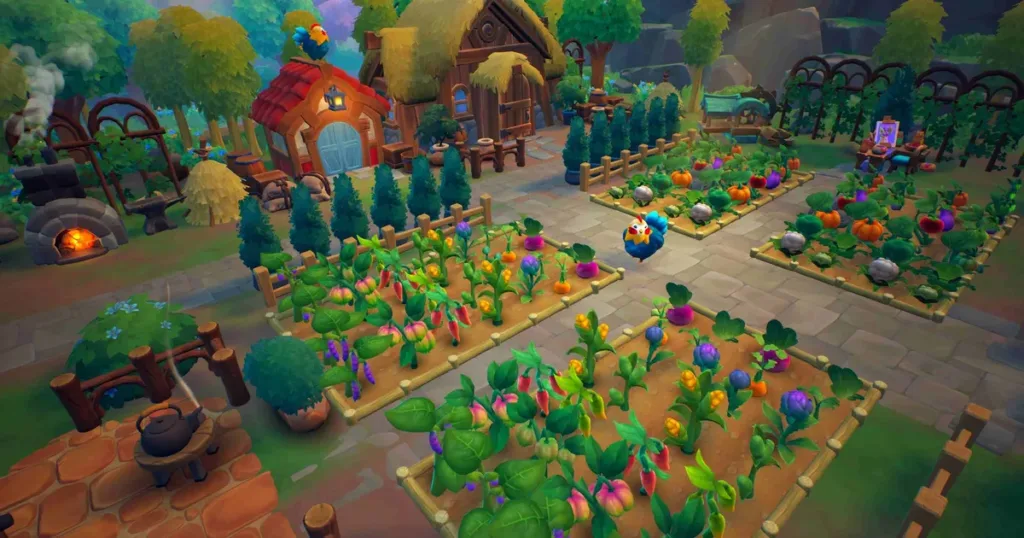
By now, you’ve likely experienced the joy of cultivating red, pink, white, orange, ivory, and yellow roses, tulips, and lilies, as well as the dazzling shades of blue, green, magenta, violet, teal, and black in hyacinth, zinnia, and trillium. But if you’re aiming for a Fae Farm garden that truly encapsulates nature’s full beauty, we’ve got you covered.
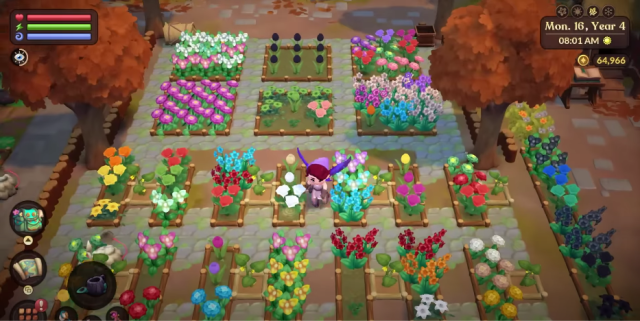
Fortunately, we’ll be following a familiar pattern—one that has already produced a stunning array of blooms.
How to Obtain All Flower Colors Up to this point, you should have created red, pink, white, orange, ivory, and yellow in roses, tulips, and lilies, as well as blue, green, magenta, violet, teal, and black in hyacinth, zinnia, and trillium.

We’ll stick to the same pattern as before: place two of the same flowers on top, leaving a gap in between them, and add one of a different flower at the bottom of the middle square. However, this time, you’ll be working on a larger scale with a plethora of flowers.
While you won’t obtain anything entirely new from this process, what we need is the same color of spawn but with two different petal genes. For example, you might want 1 white and 1 green.

Once you achieve this type of spawn, separate the types—zinnia (with two different color genes) in one plot and roses (with two different color genes) in another.
Repeat this step until you’ve completed the triangular formation. Like before, after a few days, a new seed will form, and the outcome is a matter of luck and what you’re seeking.
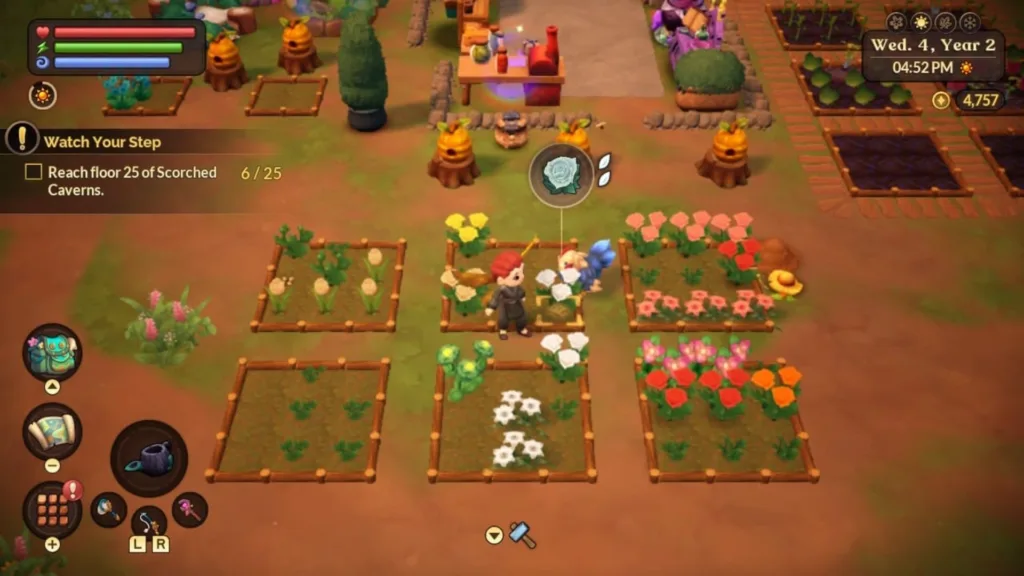
If the spawn isn’t what you were aiming for, discard that seed and wait for a new one. After repeating this process with different flower types and colors a few times, you should have unlocked ALL the flower colors. If you’re still unsure, refer to the grid below for guidance on which petal genes create which colors.”