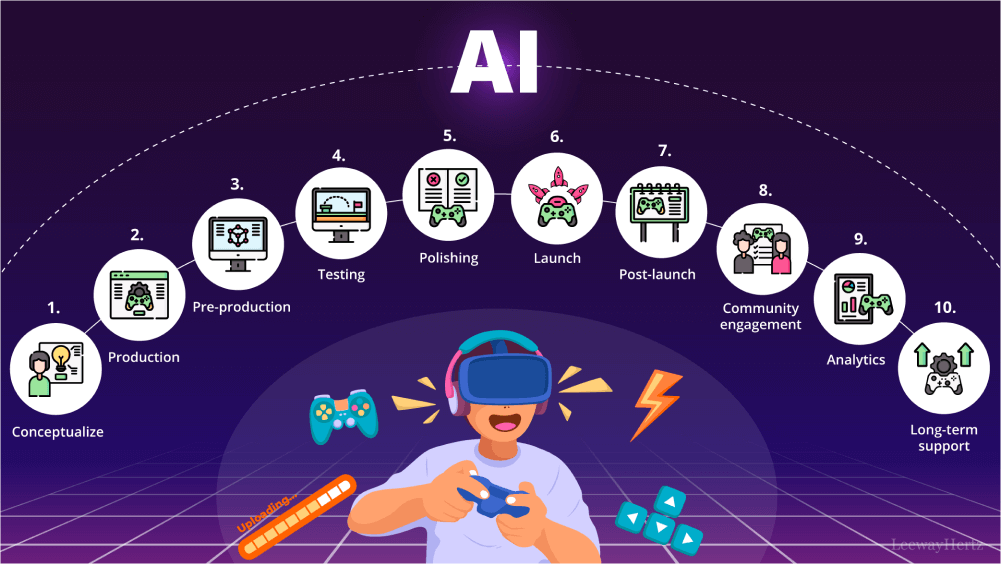

Introduction to AI in Game Development
AI in game development is changing the industry faster than ever, offering potential improvements in efficiency and creative workflows. The use of AI in game development has been increasing over the years, and it’s expected to have a broader impact on code architecture, 3D assets, cinematic creation, and analytics in 2026.
Benefits of AI in Game Development
There are several benefits of using AI in game development, including building game worlds in a fraction of the time, making game characters feel more human, and catching bugs and errors faster than manual testing. AI can also help identify patterns in player behavior and performance data, allowing developers to make data-driven decisions.
- Faster development time
- Improved game quality
- Enhanced player experience
- Increased efficiency
Step-by-Step Guide to Implementing AI in Game Development
- Research and planning: Start by researching the different AI tools and technologies available for game development, and plan how you can integrate them into your workflow.
- Choose the right tools: Select the AI tools that best fit your needs and goals, and make sure they are compatible with your existing software and hardware.
- Implement AI-powered workflows: Start implementing AI-powered workflows, such as automated testing and debugging, and use AI to generate 3D assets and cinematic content.
- Train and test AI models: Train and test AI models to ensure they are working as expected, and make adjustments as needed.
- Monitor and evaluate results: Monitor and evaluate the results of using AI in game development, and make adjustments to your workflow as needed.
Pro Tips for Using AI in Game Development
To get the most out of AI in game development, it’s essential to follow best practices and stay up-to-date with the latest trends and innovations. Here are some pro tips to keep in mind:
- Start small and scale up as needed
- Use AI to augment human creativity, not replace it
- Stay flexible and adapt to changing circumstances
- Continuously monitor and evaluate results
Common Challenges and Solutions
While AI in game development offers many benefits, it also presents some challenges. Here are some common challenges and solutions:
- Challenge: Integrating AI into existing workflows
- Solution: Start by automating simple tasks and gradually move to more complex ones
- Challenge: Ensuring AI models are accurate and reliable
- Solution: Continuously train and test AI models, and make adjustments as needed
Frequently Asked Questions
Here are some frequently asked questions about AI in game development:
- Q: What is the future of AI in game development?
- A: The future of AI in game development is expected to be shaped by advancements in machine learning, natural language processing, and computer vision.
- Q: How can AI improve game development?
- A: AI can improve game development by automating repetitive tasks, enhancing player experience, and providing data-driven insights.
- Q: What are the potential risks of using AI in game development?
- A: The potential risks of using AI in game development include job displacement, bias in AI decision-making, and over-reliance on automation.
Final Thoughts
In conclusion, AI in game development is changing the industry faster than ever, offering potential improvements in efficiency and creative workflows. By following best practices, staying up-to-date with the latest trends and innovations, and being aware of the potential risks and challenges, game developers can harness the power of AI to create better games and enhance the player experience.