
PS5 AI upscaling is finally arriving, and it’s set to rewrite the visual language of every PlayStation 5 game.
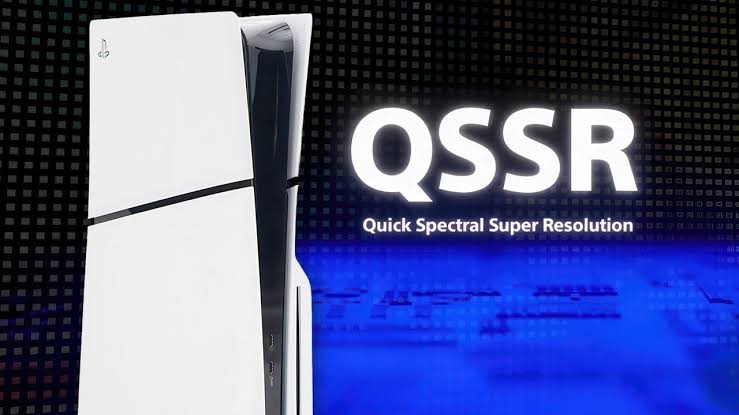
Thanks to Sony’s new Quick Spectral Super Resolution (QSSR) library, the base PS5 now inherits the AI‑driven upscaling that was once exclusive to the PS5 Pro. The update rolls out with system version 14.0 and immediately activates on supported titles, starting with Marvel’s Wolverine and Ghost of Yōtei.
What QSSR Brings to the Table
QSSR is a streamlined neural‑network engine that analyzes game images pixel by pixel and reconstructs them with added detail and stability. In practice, the upscaler targets a sweet spot of 1440p – a resolution many lower‑resolution PS5 games already aim for – and then refines the output with AI‑enhanced edge definition.
The technology works by comparing the original frame against a learned database of textures, then filling in missing information in real time. The result is a smoother, sharper picture that can look up to 3‑5× crisper than the native rendering resolution.
Unlike the older PSSR (PlayStation Spatial Super Resolution) pipeline, QSSR’s neural net is lightweight enough to run on the standard PS5’s GPU without sacrificing frame rate. That means you get the visual lift without the performance hit that traditionally accompanies higher‑resolution rendering.
First Games to Harness QSSR
Sony announced that Marvel’s Wolverine and Ghost of Yōtei will be the inaugural titles to ship with QSSR support. Both games were built with the upscaler in mind, allowing developers to render internally at a lower base resolution while trusting QSSR to deliver a final image that rivals native 4K.
Early hands‑on impressions from Digital Foundry note that the upscaled 1440p output feels “more natural” than a forced 4K stretch, preserving texture fidelity and reducing shimmering on motion.
- Marvel’s Wolverine: Faster character animations with less aliasing.
- Ghost of Yōtei: Richer environmental detail, especially in low‑light scenes.
Impact on Players and the PS5 Ecosystem
For the average PS5 owner, QSSR translates to a visual upgrade without any extra hardware. Players can expect:
- Sharper textures – fine details like foliage, fabric weave, and weapon engravings become more discernible.
- Smoother motion – AI‑driven stability reduces jitter during fast pans and camera swings.
- Consistent performance – because the upscaler runs efficiently, frame‑rate caps remain intact.
From a developer standpoint, QSSR opens the door to more ambitious art direction. Studios can allocate GPU budget to effects like ray‑traced reflections or higher‑density crowds, knowing the upscaler will handle the final image polish.
Critically, the rollout also levels the playing field between the base PS5 and the Pro. While the Pro still enjoys a dedicated hardware‑accelerated version of PSSR, the standard console now receives a comparable AI‑upscaling experience, narrowing the visual gap that has existed since the Pro’s launch.
How to Enable QSSR
After installing the 14.0 system update, QSSR activates automatically for any game that includes the library. Players can verify activation in the console’s Settings → Screen and Video → Video Output → AI Upscaling toggle. Turning the feature off will revert games to their native resolution, which may be desirable for competitive titles that prioritize raw frame‑rate over visual fidelity.
Future Roadmap
Sony’s graphics R&D team hinted that QSSR will expand beyond the initial launch titles. Upcoming releases slated for Q4 2026 and early 2027 – including several indie projects and a major RPG from Square Enix – have already pledged QSSR integration.
Beyond games, the upscaler could benefit streaming apps on the PS5, delivering clearer 1080p streams that appear closer to 4K on modern TVs. The broader ecosystem stands to gain a unified AI‑enhanced visual pipeline across entertainment media.
FAQ
What is the difference between QSSR and the older PSSR?
QSSR (Quick Spectral Super Resolution) uses a streamlined neural network optimized for the base PS5’s GPU, whereas PSSR (PlayStation Spatial Super Resolution) is a more heavyweight algorithm that powers the PS5 Pro’s upscaling. QSSR focuses on 1440p targets and offers comparable sharpness with lower power draw.
Do I need a 4K TV to see the benefits?
No. QSSR improves image quality at any display resolution. On a 1080p TV, you’ll notice cleaner edges and reduced texture blur; on a 4K set, the upscaled 1440p feed looks denser and more detailed than a native 1080p render.
Can QSSR be disabled for competitive play?
Yes. The AI upscaling toggle in Settings lets you turn QSSR off, ensuring the game runs at its native resolution and frame rate. This gives competitive players the option to prioritize performance over visual polish.
Final Thoughts
Sony’s decision to bring AI upscaling to the standard PS5 marks a pivotal shift in console graphics. QSSR delivers a tangible visual boost—up to 3‑5× sharper images—without demanding new hardware, and it does so across a growing library of titles. For players, the upgrade feels like a free graphics card upgrade; for developers, it opens creative bandwidth previously reserved for the Pro. As more games adopt the library, the PS5’s visual future looks sharper, smoother, and undeniably AI‑enhanced.