Mastering Dice Mechanics in Baldur’s Gate 3

Baldur’s Gate 3, an immersive game based on Dungeons & Dragons, revolves around randomized dice rolls, which can be daunting for newcomers. This guide provides a comprehensive overview of the game’s dice mechanics, types, and crucial elements like inspirations.
Dice Types Players Should Know About
In Baldur’s Gate 3, you’ll encounter dice terminology like 1d6, which might be unfamiliar to newcomers. These terms correspond to various dice types, commonly referred to as d4, d6, d8, d10, and d12. The “d” represents a die, while the number signifies the number of faces on the die. For example, a d20 has 20 sides, ranging from 1 to 20.
Dice Roll Mechanics
Baldur’s Gate 3 relies heavily on dice rolls to determine the outcomes of various actions. Key dice roll mechanics include:
- Initiative Roll: This determines the order of character actions in combat, with the result influenced by Dexterity and modifiers like Alert.
- Attack Roll: It decides whether an attack hits the target based on a d20 roll and the enemy’s Armor Class.
- Damage Roll: The amount of damage dealt after a successful attack, with specific dice and modifiers based on the weapon or spell used.
- Saving Throw Roll: Rolled as a d20 when a character is attacked to determine if an action succeeds or not, primarily used against spells and their effects.
- Ability Check: Used during exploration, requiring a d20 roll and ability score modifiers for tasks like perception checks.
Dice Roll Modifiers
Numerous modifiers can influence dice rolls, including ability modifiers, proficiency bonuses, and status effects. Positive modifiers enhance your chances of success, while negative ones hinder your rolls.
Critical Success and Critical Failure

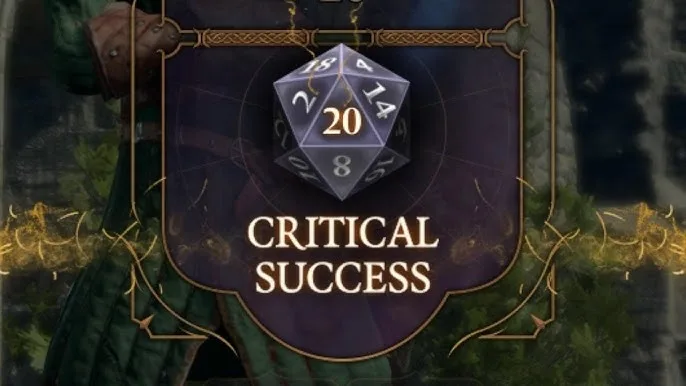
A critical success occurs when you roll the highest possible value (e.g., 20 on a d20), guaranteeing success even with negative modifiers. Conversely, a critical failure results from rolling the lowest value (e.g., 1) and leads to automatic failure, irrespective of positive modifiers.
Inspiration
In Baldur’s Gate 3, inspirations allow you to reroll a failed die in Ability checks. They are limited in quantity, but you can accumulate them through character background-related actions. Using inspirations wisely can turn the tide in critical moments.
Karmic Dice
Karmic Dice is an optional feature in Baldur’s Gate 3. When enabled, it mitigates bad luck by improving subsequent dice rolls after poor outcomes. Both players and enemies benefit from Karmic Dice. Turning it off results in entirely luck-based gameplay, potentially leading to frustrating sequences of poor rolls.
By mastering these dice mechanics and understanding their usage, players can navigate Baldur’s Gate 3 more effectively and make informed decisions. The game is available on PC and PlayStation 5.