Exploring the Real-Life Influences Behind the Game’s 120 Star Systems
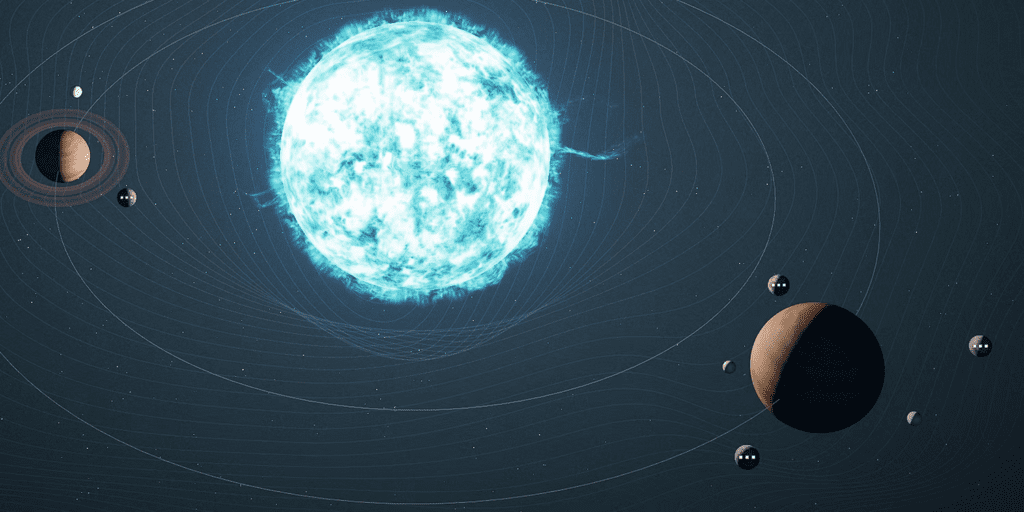
Bethesda’s Starfield has intricately woven real historical figures into its universe, naming 28 of its 120 star systems after prominent scientists. These systems pay tribute to iconic researchers who shaped the course of human knowledge and discovery. While the planets within these systems are fictional, the stars are rooted in reality, being stars within 50 light years of Earth.
- Archimedes System: Named after the Ancient Greek mathematician, inventor, and astronomer.
- Al-Battani System: Dedicated to the astronomer and mathematician from the Islamic Golden Age.
- Copernicus System: Honoring the developer of the heliocentric solar system model.
- Newton System: Named after Sir Isaac Newton, who formulated the laws of motion and invented calculus.
- Huygens System: Paying homage to Christiaan Huygens, discoverer of Saturn’s moon Titan and inventor of the pendulum clock.
- Bessel System: Named after early astrophysicist Friedrich Bessel, who deduced the existence of an unobserved star.
- Piazzi System: Honoring Giuseppe Piazzi, the astronomer who discovered the dwarf planet Ceres.
- Sagan System: Dedicated to Carl Sagan, renowned astronomer and science communicator, known for his research on extraterrestrial life.
The list includes other luminaries like John Bardeen, Niels Bohr, Steven Hawking, and Werner Heisenberg, each contributing significantly to the realms of physics and astronomy. Starfield’s inclusion of these scientists adds depth and historical context to its vast universe.